Horse deworming schedule: why fecal egg counts beat rotation
How often to deworm a horse under current AAEP guidelines: fecal egg counts, low and high shedders, checking your dewormer works, and tapeworm timing.

For decades the standard advice was to deworm every horse every two months and rotate dewormers. The American Association of Equine Practitioners (AAEP), in guidelines revised in 2024, now says to stop doing both. Most adult horses need only one or two dewormings a year. A few need more, and a fecal egg count tells you which is which.
Here is what changed, how egg counts work, how to check that your dewormer still works, and what a standard count misses. Use it to plan the conversation with your vet, who should make the final call for your horse.
Why deworming every two months fell out of favor
The every-two-months routine dates to the 1960s, when the large strongyle, or bloodworm, was the most dangerous horse parasite. Eggs took about two months to reappear after a dose, so dosing that often kept bloodworm eggs off pastures. It worked: the AAEP says decades of intensive deworming have pushed this parasite to often undetectable levels in the US.
The main parasite of adult horses today is the small strongyle. Every grazing horse carries some, and they rarely cause disease. But frequent dosing has bred worms that survive treatment:
- Small strongyle resistance to benzimidazoles (fenbendazole, oxibendazole) and pyrantel is widespread. The AAEP advises assuming both fail until a test on your farm shows otherwise.
- That leaves ivermectin and moxidectin as the only option in many places, and early signs of resistance to them have appeared.
- No new class of horse dewormer has come out in 40 years, and none is expected soon.
Rotating on a calendar never tells you whether the drug you gave still works, so the AAEP says to stop “blindly rotating” dewormer classes and to stop deworming every horse at fixed intervals year-round. If you switch products, check the active ingredient, not the brand: many brands contain the same drug.
Leaving low shedders untreated also slows resistance, because worms that never meet the drug dilute the resistant ones. A study cited in the AAEP’s 2013 guidelines found that, with effective drugs, treating only horses above 200 eggs per gram meant treating about half the horses while still cutting egg output by about 95%.
The targeted approach
The goal isn’t a worm-free horse; the AAEP says eradication is impossible and chasing it speeds up resistance. Its plan for mature horses has two tiers:
- A baseline for every horse, once or twice a year. Usually ivermectin or moxidectin, aimed at large strongyles, bots and the worms behind summer sores. If your horse grazes green pasture, include praziquantel for tapeworms at least once a year.
- Extra treatments for high shedders only. Horses shedding more than 500 eggs per gram (EPG) get one or two more, depending on how long the parasite season lasts where you live.
Egg counts matter because shedding is lopsided. The AAEP describes a 20/80 rule: 20% or fewer of the horses in a herd shed 80% of the eggs. Mature horses tend to stay in the same category over time.
| Category | Strongyle eggs per gram | Usual plan |
|---|---|---|
| Low shedder | Under 200 | Baseline only: 1 to 2 treatments a year |
| Moderate shedder | 200 to 500 | Baseline; some vets add one in the season |
| High shedder | Over 500 | Baseline plus 1 to 2 extra in the season |
The 2024 AAEP guidelines set the high-shedder line at 500 EPG. The 200 EPG cutoff comes from the 2013 edition, which estimated that 50% to 70% of adult horses are low shedders, and university programs such as Colorado State’s and the University of Georgia’s still use it. Horses near a cutoff can switch groups, so don’t label a horse on one count.
Keep testing horses over 15. Some revert to high shedding, and PPID (equine Cushing’s disease) has been linked to higher counts.
How a fecal egg count works
A lab or your vet’s clinic floats the eggs out of a weighed manure sample and counts them under a microscope, giving eggs per gram. AAEP sample tips:
- Use manure as fresh as possible: under 12 hours old, refrigerated right away.
- Seal it in an airtight bag with the air squeezed out.
- Never freeze it. Freezing damages the eggs.
- Get it tested within 7 days.
A count shows how many eggs a horse puts onto the pasture. It doesn’t measure how many worms the horse carries, and the AAEP says not to use it to diagnose a sick horse.
When to test
Wait long enough after the last dewormer, or you measure the drug instead of the horse. The 2013 AAEP guidelines suggested at least 16 weeks after moxidectin, 12 weeks after ivermectin, and 9 weeks after fenbendazole, oxibendazole or pyrantel. Confirm the wait with your vet.
Count once or twice a year, timed to your season. The 2024 guidelines say counts are reliable year-round, but the treatments they guide belong in the strongyle transmission season. Cold stops eggs developing on pasture and high heat kills them, so that season varies across the US. Colorado State’s schedule counts before spring deworming, ideally again in fall. The University of Georgia puts Southeast treatments in spring and fall, and UF/IFAS focuses Florida control on fall, winter and spring.
Check that your dewormer works
The fecal egg count reduction test (FECRT) shows whether a dewormer still works on your farm. The AAEP recommends one every year:
- Run a fecal egg count.
- Deworm at the full label dose.
- Count again 14 days later.
- As a rule of thumb, the count should drop by more than 95%.
The AAEP’s formal test uses a group, ideally at least 5 horses sharing pasture. A one-horse check is still worthwhile, for example on a new horse in quarantine. A poor result most likely means resistance; a good one deserves some caution, since with few eggs counted it can happen by chance. If a product fails, check its storage, expiry date and dose, then retest. If it fails again, pick a different drug class with your vet.
Tapeworms and encysted small strongyles
Both need a specific product, and routine counts miss both.
Tapeworms. A standard count catches fewer than 10% of tapeworm infections. The AAEP considers tapeworms common in grazing horses and links them to some types of colic. Treatment is praziquantel (sold in the US only combined with ivermectin or moxidectin) or a double dose of pyrantel pamoate. Give it at least once a year if your horse grazes green pasture, in most areas in late fall after cold weather ends transmission.
Encysted small strongyles. Small strongyle larvae can lie encysted in the gut wall, where egg counts can’t see them. Only moxidectin and a five-day course of fenbendazole are labeled to kill them, and studies cited by the AAEP found each removes less than 85%. Colorado State recommends moxidectin in fall near the end of the grazing season. The AAEP adds that disease from these larvae appears extremely rare in North American horses, and no data yet show a clinical benefit from routine larvicidal treatment. Ask your vet whether your horse needs one.
Foals and young horses are different
The AAEP does not recommend egg-count-based targeting for foals, weanlings or yearlings. Roundworms come first: two treatments, at about 2 to 3 months and about 5 months, usually with a benzimidazole, then a first egg count at 5 to 6 months. Most yearlings shed over 1,000 EPG and are treated as high shedders, and two- and three-year-olds usually get 3 to 4 treatments a year. Deworming a heavily infected foal can cause an impaction of dead worms, so plan young horses with your vet.
Pasture management lowers the load
Strongyle eggs hatch in manure into larvae that move onto the grass and get eaten. Break that cycle and fewer larvae reach your horse.
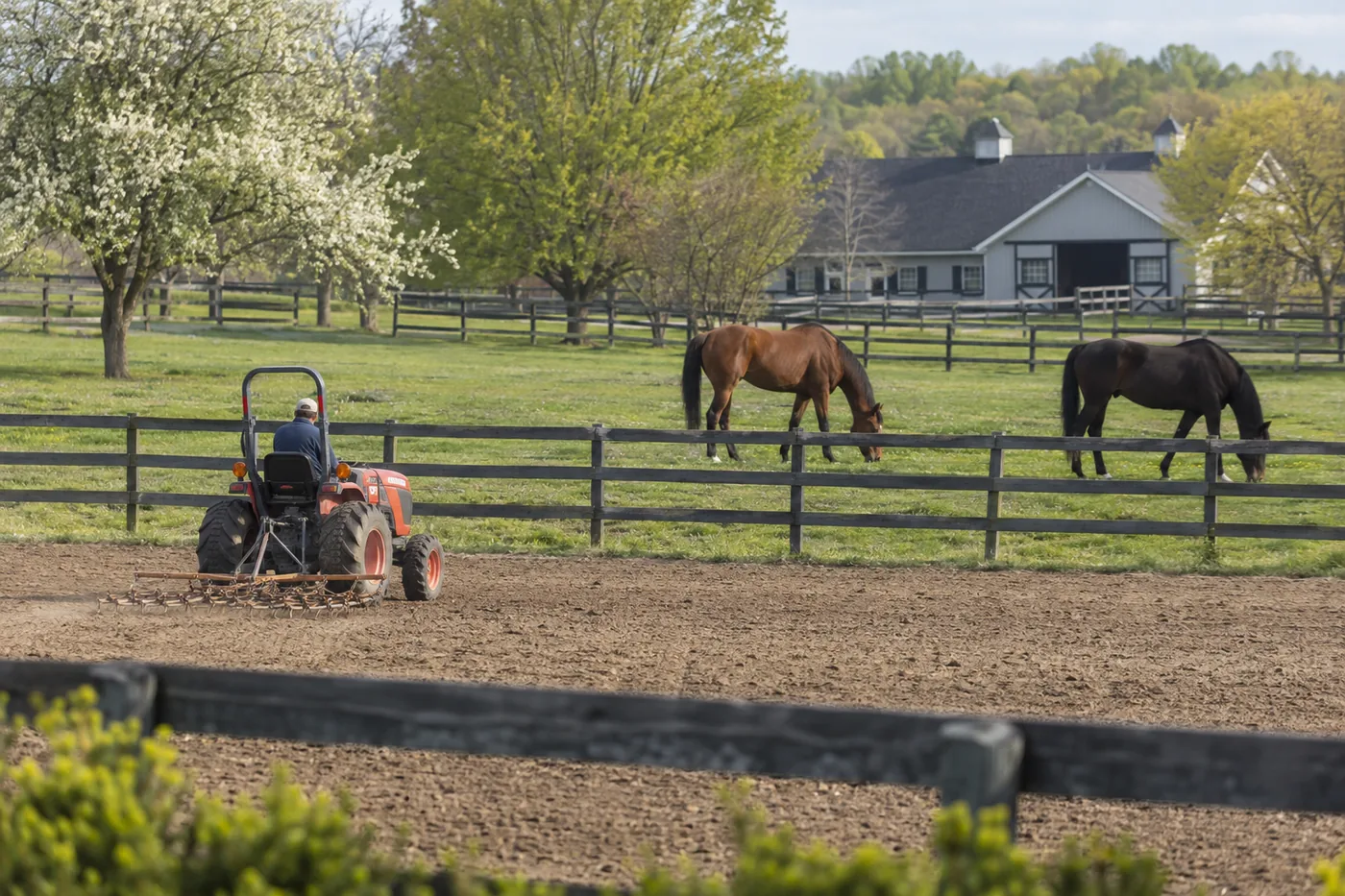
- Pick up manure at least twice a week, as UF/IFAS advises.
- Compost before spreading. Strongyle larvae in manure are virtually wiped out above 104°F for at least a week. Never spread uncomposted manure on horse pasture.
- Harrow only in hot, dry weather, then keep horses off; Colorado State suggests two months.
- Avoid overstocking.
- Co-graze if you can. Horse strongyles can’t infect cattle, sheep or goats, and the AAEP says grazing them on horse pasture may help.
- Don’t count on resting a field. Larvae die within days to weeks above 100°F but survive six to nine months in colder weather.
Keep the record in one place
A targeted plan runs on history: each horse’s counts, the product and date of every deworming, and your yearly FECRT results. Equiny lets you log egg counts and dewormings in your horse’s record and reminds you when the next count is due. For the rest of the routine, see our horse care checklist.
Frequently asked questions
How often should I deworm my horse?
Under the AAEP’s 2024 guidelines, most healthy adult horses need one or two dewormings a year. Horses with egg counts over 500 eggs per gram usually get one or two more during the parasite season. Young horses follow a different plan. Your vet should set the schedule for your horse.
What is a normal fecal egg count for a horse?
Under 200 eggs per gram is generally considered low, 200 to 500 moderate, and over 500 high. A count measures eggs going onto the pasture, not worms in the horse, so a high count doesn’t by itself mean the horse is sick.
Does a fecal egg count show tapeworms?
Usually not. A standard count detects fewer than 10% of tapeworm infections. The AAEP recommends a tapeworm treatment at least once a year, usually in late fall, for horses on green pasture.
Should I still rotate dewormers?
The AAEP says to stop rotating dewormer classes blindly and to stop deworming on a fixed calendar. Rotation doesn’t show whether a drug still works on your farm; a yearly fecal egg count reduction test does.
Do herbal or natural dewormers work?
The AAEP says the efficacy of herbal and organic dewormers has never been shown in controlled studies, and similar products tested in sheep had little or no effect.
Sources
- AAEP: Internal Parasite Control Guidelines (2024 revision)
- AAEP Internal Parasite Control Guidelines, full text (PDF, 2024)
- AAEP Parasite Control Guidelines, 2013 edition (PDF, hosted by Colorado State University Extension)
- Colorado State University Equine Field Service: Recommended Equine Deworming Schedule (PDF)
- University of Georgia: Equine Parasite Control
- UF/IFAS Extension: Developing a Deworming Program for Florida Horses (VM251)
This guide is general information, not veterinary advice. Ask your vet about your own horse.